Close to 15 years ago a relative of mine, who drove limousines full time, observed that delivery trucks, driven by the growth of Amazon, were everywhere. He was slightly despondent that they were “taking over the road,” and did not understand why the service was so popular.
At the time, I did not understand either,
but I tried to explain that it was more efficient.
The following two images illustrate what I meant.
Consider some random houses in America’s original suburban neighborhood,
and the errands their residents run to nearby stores:
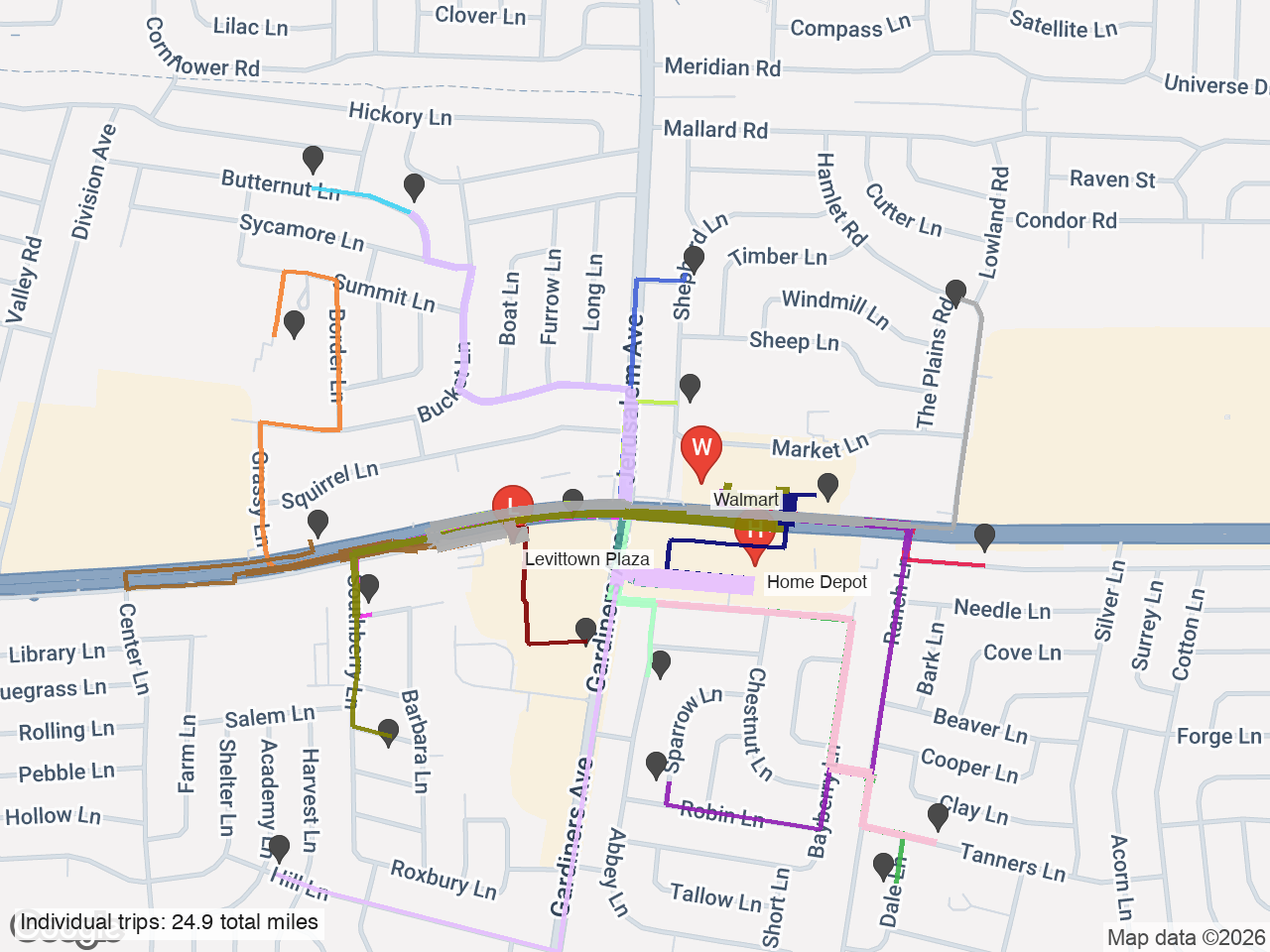
And now consider a possible route that a delivery truck could take to reach each one:
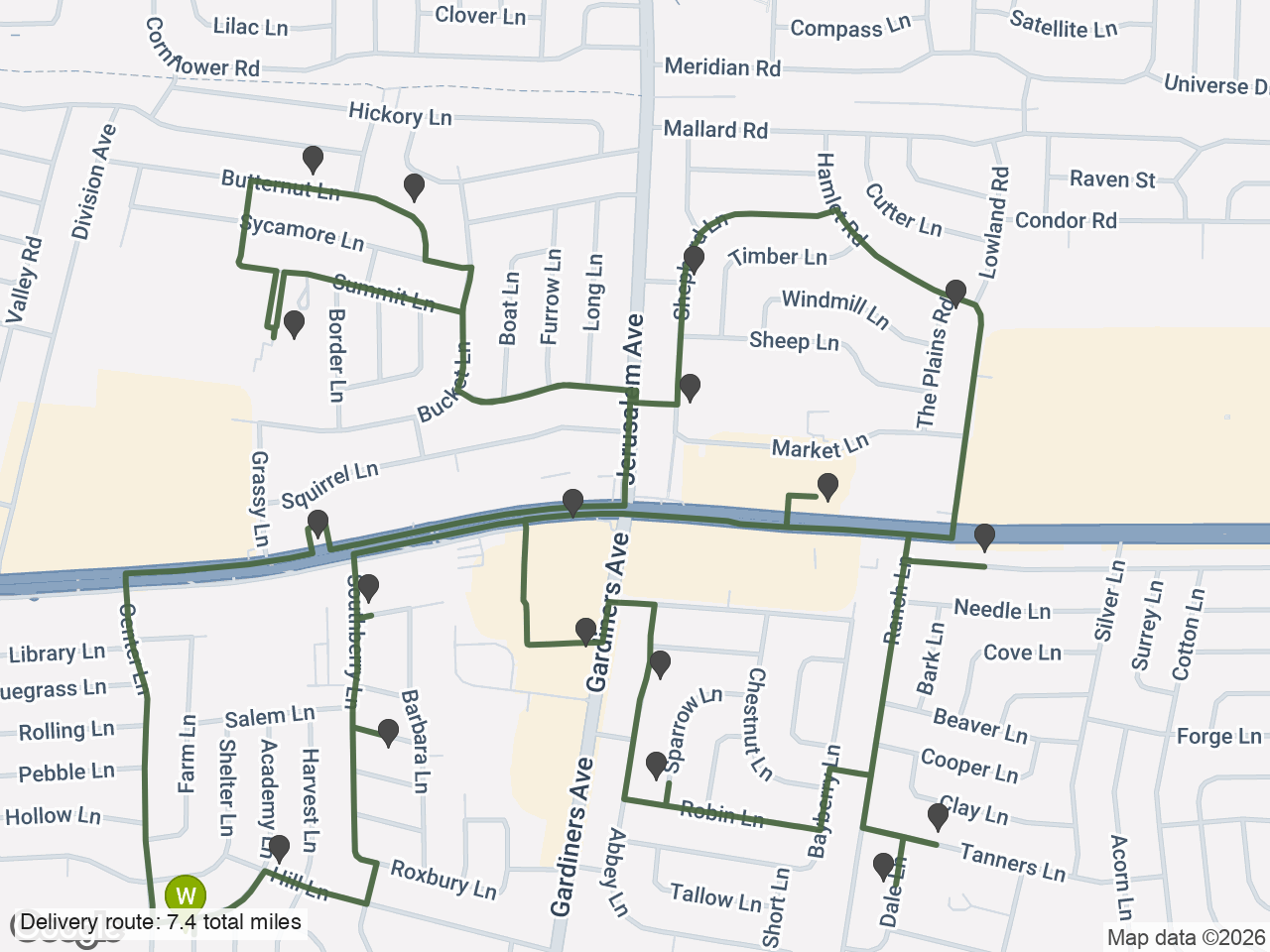
It is not immediately obvious, but the aggregate length of the lines in the first map is greater than the lines in the second. The sum of the individual miles traveled by each person going to a random store, is much more than the total number of miles traveled by one driver in the delivery truck. More than 3 times as much: 24.9 vs 7.4 miles! To help with the intuition for this result remember that the delivery driver does not go back to the store, but to the next house, and what is hidden by the image is that the individuals use the same road multiple times. On aggregate this advantage is difficult to overcome1, and it is the reason why today, prices on Amazon are frequently cheaper than at the store.
Is there an analog of the first image in our digital age? Yes! Look at your browser! All of those tabs: email, calendar, news, bank, work (…etc) are independent trips. They do carry different payloads (you are consuming different things), but you are also sharing identical information about yourself with those sites. You may have different usernames and passwords for each site, but that is a requirement mandated by the sites because they control how you can access them.
Identity is the most obvious redundancy, but consider the broader experience of how much modern work is about transferring data from one website to another. A vendor sends you an invoice via email; you log in, download the PDF to your computer. You log into the shared drive to upload it for the team. You log into the expense system to submit the claim. You log into Slack to notify your manager. Each step carries a different payload — a PDF, a folder, a dollar amount, a message — but every single one of them begins with you proving who you are.
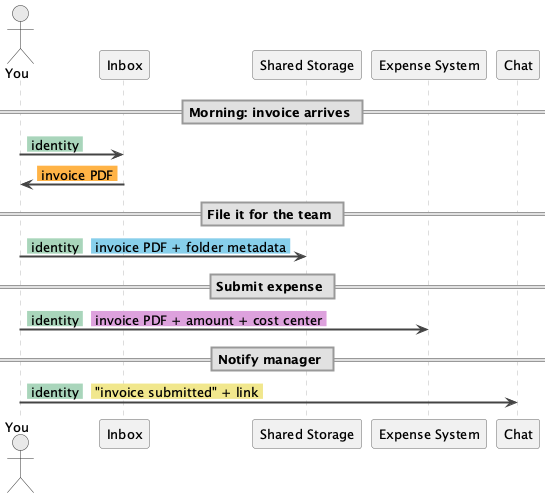
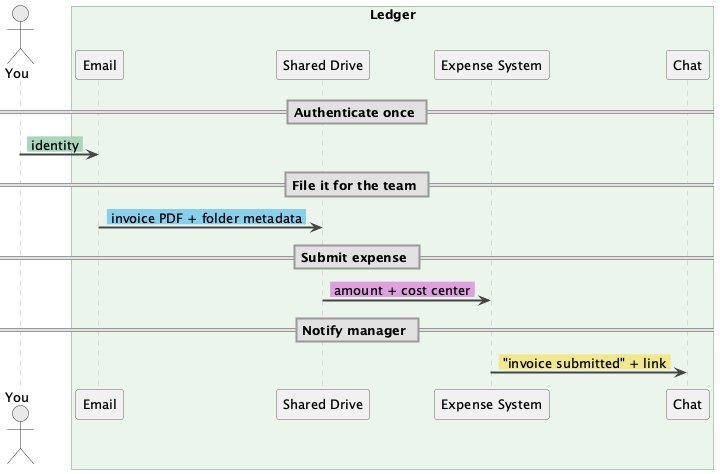
In the physical delivery computation, Amazon changed who did the driving, blockchains change who performs the computation. More specifically, whose computer performs the computation.
What if you only had to prove your identity once? What if your workflows could build on each other within the same system?
Postscript
What about cryptocurrency?
Bitcoin, the first application that inspired this technology, solved the distributed computing problem of maintaining shared state, by tieing it to an economic reward of generating money. Unfortunately, two things also occurred, the application did not really easily allow for representing assets beyond Bitcoin, and at the same time the need to maintain money as part of that shared state became an unquestioned assumption of all future cryptocurrencies.
Consequently, the term blockchain, became almost a synonym for this technology. Furthermore, the need for a digital blockchain (with hashes, and hashes of hashes) became a defacto requirement. I prefer the term distributed ledger technology (DLT), but that term has now fallen out of use. Nonetheless I want to impress upon the reader, that the key distinction of “blockchains” is that they replace the traditional client-server technological architecture with one that is radically different, because we change who is running which server.